

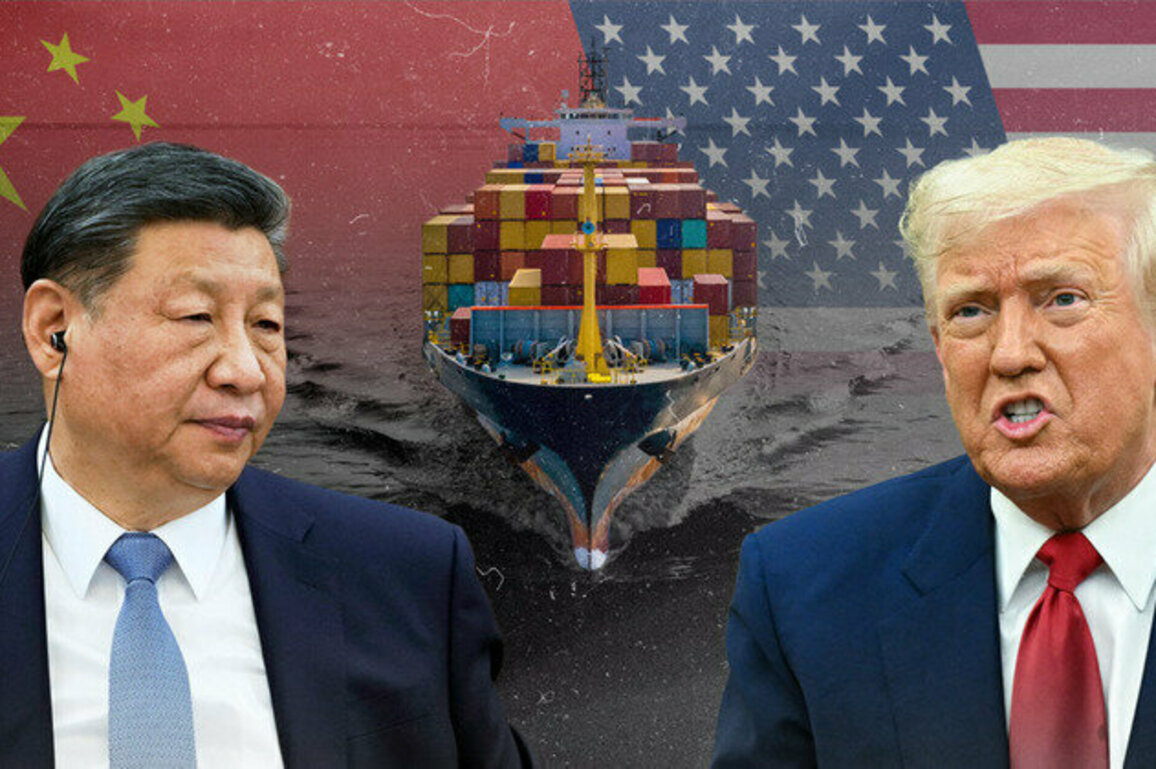
The current trade tensions between the US and China have an air of familiarity dating back to 2018, under the first Trump presidency. But the situation this time is very different in many respects, and it appears to be working in Beijing's favour.
Theres a whiff of dj vu around the currenttrade warbetween the US andChina, cranked up by PresidentDonald Trumpslatest tariff blitz. Back in 2018, under the first Trump presidency, the two economic giants were already in the ring when the Republican US president landed his first importtariffpunch.
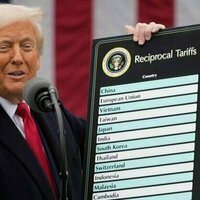
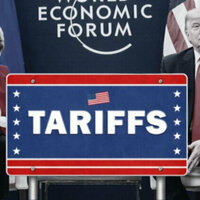
In 2018's first round, Beijing and Washington responded to each other with an "eye for an eye" strategy, matching tariff for tariff. The same game is again playing out since Trumpannounced his sweeping global tariff planon April 2.
Trumps first salvo was the imposition of 34 percent tariffs on all imported Chinese products, which were already taxed at 20 percent.Beijing promptly followed suit, provoking the ire of the US president. China was the only country to announce retaliatory measures so quickly, noted Xin Sun, a specialist on the Chinese economy at King's College London. China retaliated while all the other countries have been taking a very cautious approach and prioritising, or preferring to negotiate, with the United States, said Xin.
The US president then threatened a further ration of customs duties in response to Beijings retaliation, resulting in a snowballing that has seen a whopping 104 percent duties on Chinese products come into effect on Wednesday. In its lengthy policy statement released shortly after they kicked in,China vowed to fight to the end.
If the US insists on further escalating its economic and trade restrictions, China has the firm will and abundant means to take necessary countermeasures and will fight to the end, the Ministry of Commerce wrote in a statement introducing the white paper.
Read moreGlobal trade upended as China's 104% tariffs go into effect
Return of the law of retaliation
The battle lines are drawn, the battle plans revealed. Lex talionis, a legal concept dating back to ancient Roman law that codified a retaliation resembling the offence, carries on from antiquity into global trade today.
But the comparison between the trade situation in 2018 and today has its limits, according to Xin. It's actually very different, radically different from 2018 for multiple reasons, Xin said.
For starters, China is in a more fragile economic situation, with the country barely reaching its 5 percent growth rate target set for 2024, a far cry from the double-digit growth rates of previous years. China's weakness at the moment is that it's in economic transition. The government is trying, quite forcefully, to move the country into a new growth model away from infrastructure spending and housing and real estate, and moving more into technology, said Johannes Petry, a specialist in political economy and Chinese financial markets at the Goethe University Frankfurt. So the economy is weak in China and the tariffs will definitely add to that, as well [as] to the [global] economic downturn.
With rising unemployment and falling living standards comes the fear of social unrest for Chinese authorities. The Chinese economy is facing more direct challenges. It is still recovering from Covid. It is still trying to find its footing after what's been a very difficult recovery period, said Marc Lanteigne, a China expert at The Arctic University of Norway. There will be a lot of pressure on Beijing to ensure that the economic damage is minimal. And if they're not successful, we could start to see a lot of pushback if not necessarily from the public, from the upper echelons of power themselves.
Trump's hands are also freer than they were in 2018. The Trump 2.0 administration does not include anyone who can calm the presidents tariff ardour. In his first term, the administration featured adults in the room the nickname given to a few slightly more moderate advisers such as then chief of staffJohn Kellyand former national security adviser H.R. McMaster who prevented Trump from pushing the envelope too far.
US madman theory vs. Chinese preparation
There are no such constraints this time, with a Trump fan club in place of a government. Trump can now apply the madman theory, a foreign policy strategy associated with former US presidentRichard Nixonconsisting of making interlocutors believe the man in theWhite Houseis capable of anything.
Washington has also decided, in its mad dash for all-out tariffs, to take particular aim at countries such as Mexico and Vietnam that Chinese exporters used as intermediaries to get around the tariffs in 2018.
But Trump is taking on a rival which is better prepared than in 2018. China has had a lot of time to prepare for a resumption of the trade war. They were caught a bit off-guard in 2018. But once it became apparent, especially under the Biden administration, that a lot of these tariffs were going to be left on, it really signified to Beijing that we need to start preparing our defences for when the situation might accelerate, Lanteigne said.
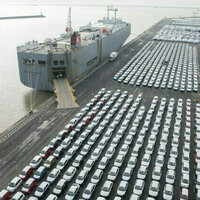
Over the past seven years, China has succeeded in diversifying its export base. China's export reliance on the United States has been reduced significantly. Back in 2018, exports to the US accounted for around 20 percent of China's total exports. Now that figure has been decreased to around 14 percent. So, even though this time, the tariff rates are much higher compared with 2018, China is relatively better prepared, Xin said.
China's trade with Global South countries has actually overtaken its trade with the G7, added Petry. Compared to ten years ago, they're not as sensitive anymore to US tariffs.
Many experts believe China probably also has more ammunition than the US to limit the economic damage of a trade war. The Chinese government has a lot of fiscal and monetary room to manoeuvre, said Petry. They can go down withinterest rates. They can spend more money. The central government can issue more debt. Government debt in China, for instance, is not as high as in the US. In the US, on the other hand, the deficit has risen from just under 4 percent in 2018 to over 6 percent in 2024. The US government knows that in the event of a recession, it will not have the same reserves as it had in 2018.
Alienating allies gives China a win
China also has more options to increase the economic pain on its competitors and adversaries, and that can extend to the sphere of rare earth minerals critical for electronics, optics and other high-precision sectors. China can impose export controls over a wider range of rare earths because currently China only imposes bans on rare earths for certain elements, but not all of them, said Xin. If tariffs the trade wars escalate even further, it's a possibility that China could apply export controls over a wider range of rare earths.
The main US option for maintaining the initiative in the escalating trade war would be, apart from imposing ever-higher customs duties, to impose financial and economic sanctions similar to what was done for Russia or Iran, notes Petry. But while the prospect cannot be ruled out entirely, experts interviewed by FRANCE 24 believe it would be a measure of last resort.
Had Trump not also placed tariffs on, for example, the European Union, Japan and Korea, he probably could have convinced these countries to link resources and put even more pressure on China. I don't think that's going to happen under current circumstances. I think that it's going to be very difficult for the US to get partners and allies to deal with China under the current situation, said Lanteigne.
The responses of other countries towards the two global economic giants remain the main unknown factor in this new trade war. If the US succeeds in forcing other countries to put an end to their tariffs, and if they get behind it in the trade war against China, that would be a worst-case scenario for Beijing, notes Xin.
Thats one of the reasons China decided to react quickly and forcefully to the Trump tariffs. It was to send a strong signal to everybody else that there is no tolerance from China about this kind of trade barriers and tariffs, Xin said. If anybody else would like to raise tariffs against China in a similar way [as] the United States, then they should be ready to face the consequences.
(This is a translation of theoriginal in French.)
Originally published on France24