

The future of peacekeeping took centre stage on Tuesday in Berlin as UN chief Antnio Guterres urged Member States to do more to support the global bodys Blue Helmets and stave off the worst impacts of deep funding cuts.
With just weeks to go before a key ministerial meeting in Berlin, the UN and Germany have reaffirmed their commitment to peacekeeping a vital tool for global stability that must now adapt to dwindling resources.
Addressing theUN Peacekeeping Ministerial 2025in the German capital, the Secretary-General told dozens of ministers from more than 130 countries that peacekeepers remain key to help countries move from conflict to peace.
In trouble spots around the world, Blue Helmets can mean the difference between life and death,he insisted. They are also a clear demonstration of the power of multilateral action to maintain, achieve and sustain peace.
Despite the proven value of peacekeeping missions in ensuring a durable peace in countless countries from Cambodia to Liberia and Timor Leste, Mr. Guterres warned that todays challenges have made this task much harder.
We are now facing the highest number of conflicts since the founding of the United Nations and record numbers of people fleeing across borders in search of safety and refuge, he said, before alluding to additional obstacles caused by an absence of political support for peacekeeping mandates.
The UNs peacekeeping budget runs on a July-June cycle and has unpaid arrears of $2.7 billion.
Practical approach
To counter this and in the face of dramatic financial constraints now affecting the UN in its entirety, the Secretary-General announced an urgent review of operations to inspire a new peacekeeping model that is fit for the future.
In coming years, a clear exit strategy for Blue Helmets will be key, Mr. Guterres said, as well as working with Member States and theSecurity Councilto ensure that any new mandates are prioritized and achievable with the resources available.
Other clues about what UN peacekeeping 2.0 could look like post-reform might possibly be gleaned from the missions that the UN chief referred to in his speech in Germany.
Active missions such asUNIFILin Lebanon have already shown that it is possible to adapt to todays challenges while still ensuring peace and aid deliveries, Mr. Guterres noted.
And in a nod toMINUSCAin Central African Republic, the Secretary-General highlighted its work inprotecting civilians and assisting the government to extend its reach beyond the capital where people are in desperate need.
In the Democratic Republic of the Congo, too and despite ongoing fighting there, peacekeepers fromMONUSCOalso remain in the field and protect vulnerable populations, the UN chief maintained.
As Member States prepared to announce financial pledges for peacekeeping on Wednesday, Mr. Guterres stressed that the overall budget for missions represented only 0.5 per cent of global military spending.
Peacekeeping is only as strong as Member States commitment to it, stressed Mr. Guterres.
Amid massive cuts to UN funding by Member States, it remains to be seen if the upbeat mood in Berlin translates into desperately needed financial support for the global bodys peacekeeping operations.
UN peacekeeping today is more vibrant than ever, insisted Boris Pistorius, Minister of Defence of Germany. It is and will remain a cornerstone of international stability. Let us commit to making it even more effective for the sake of those who depend on it.
Cutbacks
The UN chiefs push to streamline the global body comes a day after his call to push ahead with major efficiency improvements and cost-cutting in response to the chronic liquidity crisis caused by Member States falling into arrears.
Important as these sweeping structural reforms are with potential staff downsizing of up to 20 per cent they are not the answer to the failure of some countries to pay the Organization to fulfil the mandates they have given it, Mr. Guterres insisted.
According toinformationprovided by the UN Controller to the General Assemblys Fifth Committee (Administrative and Budgetary), only $1.8 billion has been received against the $3.5 billionregular budget assessments for 2025a shortfall of around 50 per cent.
In the budget line for unpaid assessments these amounted to $2.4 billion on 30 April, with the United States owing about $1.5 billion, China $597 million, Russia $72 million, Saudi Arabia $42 million, Mexico $38 million and Venezuela $38 million. An additional $137 million has yet to be paid by other Member States.
For International Tribunals, total contributions outstanding totalled $79 million on 30 April.
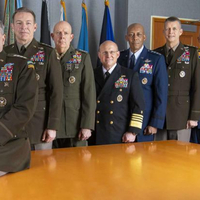
Bundeswehr/Jana NeumannAt the 2025 UN Peacekeeping Ministerial in Berlin, Secretary General Antnio Guterres underscored the vital role of UN peacekeeping and urged Member States to help shape peace operations fit for the future.Bundeswehr/Jana NeumannAt the 2025 UN Peacekeeping Ministerial in Berlin, Secretary General Antnio Guterres underscored the vital role of UN peacekeeping and urged Member States to help shape peace operations fit for the future.