


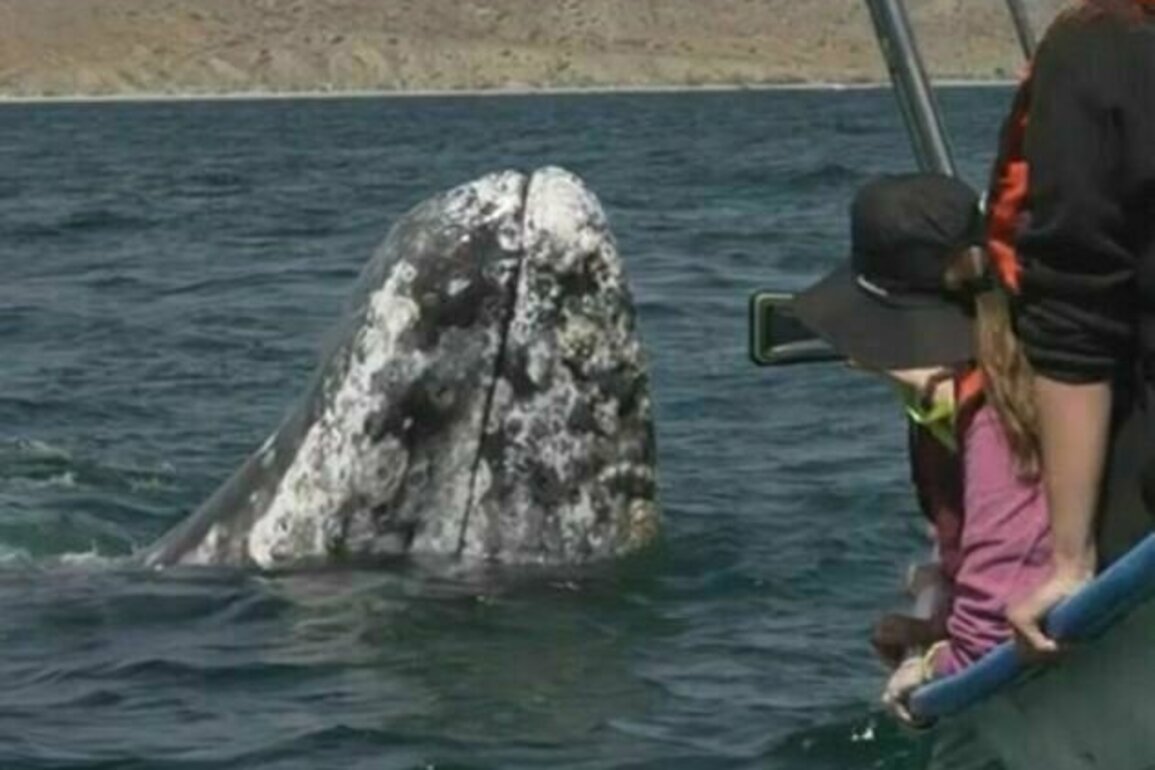
Once considered a conservation success story, the Eastern Pacific gray whale is now vanishing a stark warning of climate chaos in motion, writesSue Arnold.
CLIMATE CHANGE is claiming its first whale victim. The Eastern Pacific Californiagray whalepopulation is collapsing dying of starvation stranding levels are through the roof, government action non-existent.
Arecent reportby three highly experienced biologists with considerable gray whale expertise spelled out the current reality a reality that, without ending fossil fuel emissions and projects, will almost certainly see the whales confined to history.
Scientists have described the whales as a primary indicator species for the health of our ocean and coastlines. The alarming report by the biologists details a catastrophic population collapse. The latest estimate of 13,000 animals is less than half of the 27,000 population ten years ago.
Australias war on nature leading to environmental collapseBulldozers roll, koalas perish and governments look the other way as extinction becomes policy.
Anopen letterwritten by gray whale biologists states:
The report fromNOAA Fisheriesreveals that the gray whale count has plunged to around 13,000 the lowest since the 1970s and that only 85 calves were seen migrating past Central California this year, the fewest since records began in 1994. NOAA notes that low calf numbers since 2019 indicate that reproduction has remained too low for the population to rebound.
Alisa Schulman-Janiger, who leads an annual gray whale census near Los Angeles,describedthe situation:
Gray whales are not present in the southern hemisphere. Their marine domain stretches from Mexico to the Chukchi, Bering and Beaufort Seas. Their annual migration is the longest of any mammal covering around 19,312 kilometres. Gray whales are one of the most ancient baleen whales alive today, having roamed the oceans for nearly 30 million years.
Gray whale populations were historically found on both sides of the North Atlantic as well as both sides of the North Pacific. Today only one viable race survives theEastern North Pacific gray whaleliterally hanging on by the skin of its non-existent teeth. In the 1800s, the whales were hunted to near extinction by commercial whaling. Ongoing hunting in the Chukchi Sea and thefederal approvalof the U.S.Makah tribeto kill two to three gray whales annually are potentially added drivers of looming extinction.
Polar regions in peril without government actionWhat will it take to get any government to recognise and take substantive action on climate change and biodiversity loss?
According to the three scientists, the two groups will collectively hunt 140 whales per year. The International Whaling Commission (IWC) quota for gray whales taken by the native people of Chukotka and Washington State from 20192025 is 980, with the unused portion of a strike quota carried forward and added to the annual strike quota of subsequent years.
Roughly the same size as humpback whales, grays can live to 80 years of age. Their scientific name, Eschrichtius robustus, is a recognition of the whales incredible ability to survive.
Nicknamed devil fish, gray whale mothers are fiercely protective of their calves. The whales are also friendly to humans. In theBaja Mexico lagunas, tourists come from all over the world to have the rare experience of touching the whales who bring their young to the small pangas run from reservations.
These whales love being scratched, stroked, sometimes staying by the pangas for hours. Its an extraordinary feeling an intense interspecies communication which defies logic at the same time raising deep emotions. When a gray whale eye looks deep into human eyes, its a spiritual experience.
Administrations of both the Republican and Democrat parties have stubbornly refused to list gray whales under the provisions of theEndangered Species Act. Touted as an environmental success story, the whales have been consistently denied the legal protection provided by the Act, leaving them significantly vulnerable to all manner of threats.
In spite of disasters, including several major unknown mortality events (UME) as described by U.S. authorities, ongoing evidence of skinny whales, whales trapped in crab pot lines, dealing with military and seismic low-frequency sonar, significant orca predation, ship strikes, and hunting the whales survived and increased. But in recent years, there have been spectacular population crashes.
The UME from2018 to 2023involved 690 gray whale strandings, which occurred from Alaska to Mexico. Malnutrition was the common cause of death. An earlier UME in19992000created a similar high mortality of 650 whales, triggered by unusual environmental conditions in the Arctic.
Along with biodiversity loss and fossil fuel causation being never-to-be-mentioned political words in Australia, climate change impacts causing the collapse of the gray whale population have suffered the same censorship in the U.S. by both administrations. Fossil fuel and exponentially increasing carbon emissions are the primary cause the legacy of governments who reject any substantive action to end fossil fuel projects and ensure upgraded environmental legislation dealing with climate impacts.
Drastic times call for drastic measuresClimate report suggests net zero by 2050 is unachievable on our current trajectory.
Impacts on gray whales aredescribedin code as:
Theopen letterfrom three gray whale biologists warns that:
In fact, the cascading loss ofsea ice covercaused by a warming Arctic has been catastrophic to the marine environment. Detritus from the melting ice is essential for feeding seabed organisms, phytoplankton and the benthic community. Theres increasingly limited prey for not only gray whales but othermarine speciesdependent on plankton and the benthic amphipod community.
Gray whales are specialist feeders with no obvious substitutes for the amphipods on which the species depends. They will also eat krill, mysids and occasionally small fishes, but they have evolved to feed on benthic prey as their staple diet.
In 2000, ProfessorBurney Le Bufpublished apaperdemonstrating a significant decline in amphipod density could have long-term effects on the future growth and stability of the gray whale population because amphipods recover slowly.
The long-term survival of this ancient line of baleen whales is far from guaranteed. This most recent collapse in the population, combined with the current administrations rejection of climate change, does not augur well. Efforts will be made at the next IWC meeting to address the plight of gray whales, but without addressing fossil fuel carbon emissions with a genuine, urgent global response, the whales population collapse is an indication of a dismal future.
Sue Arnoldis an IA columnist and freelance investigative journalist. You can follow Sue@koalacrisis.
Related Articles
- Trump's whirlwind: Our leaders are making the climate disaster worse
- Outsourcing the blame: How Australia fuels Chinas emissions
- Australias war on nature leading to environmental collapse
- Arrest and murder of activists a day's work for fossil fuel industry
- Australian politics suffering from collective madness