

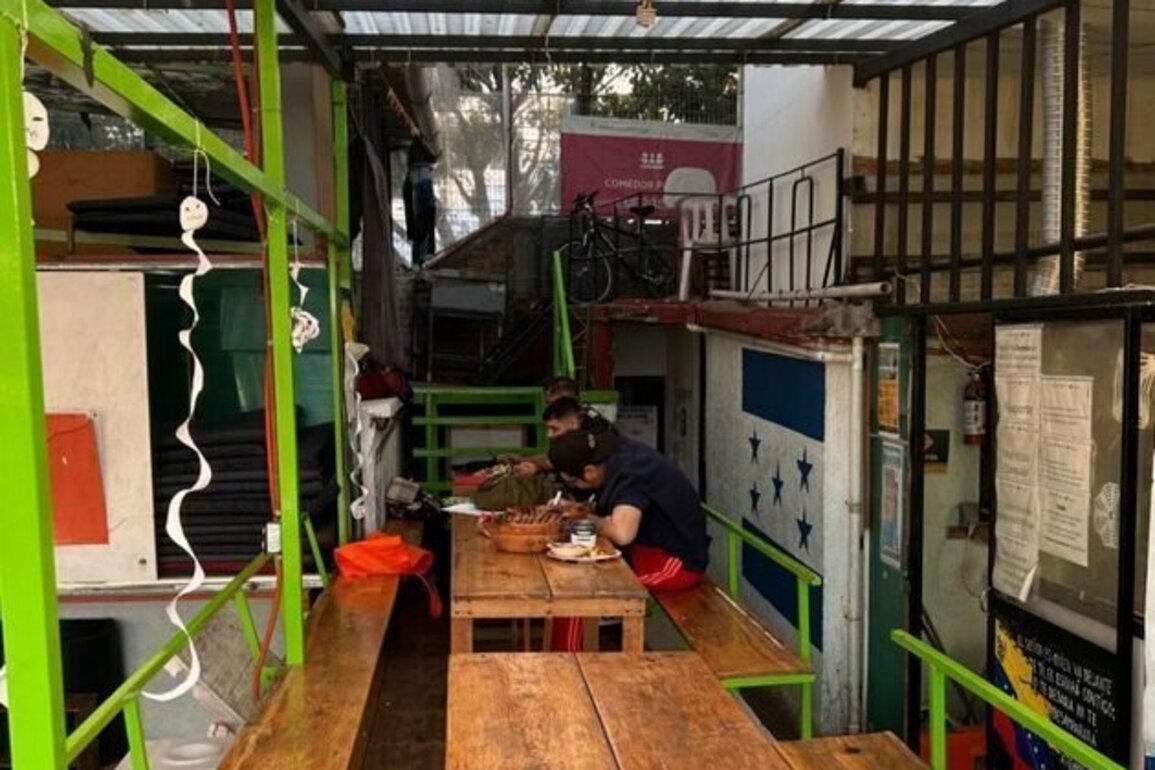
MEXICO CITY (CN) - Only a year ago, the long wooden desks of Casa Tochan, a migrant shelter in Mexico City, were covered with hands anxiously tapping on phones, waiting for an appointment to cross the border into the United States.
Now, slower bodies gather around after work, sharing meals, chatting or video calling relatives back home, unwinding the long days of settling in the city. For most of them, the hope of crossing the border and starting a new life in the U.S. is now paused indefinitely.
"Mexico has become a containment dam for the United States," said Jorge Rocha, who works at Tochan.
Panic spread across the border after President Donald Trump paused most of the programs that allowed migrants to request asylum and enter the country legally, including those that provided appointments at border crossings. For thousands, reaching Mexico had meant indebtedness, crossing the treacherous Darien Gap and being subjected to violence and extortion.
During the last decade, as migration toward the U.S. increased with South Americans joining Central Americans, so did the surrounding business - much of it led by organized crime and police forces. It was no easy journey.
A Sept. 17 report from UNCHR, the U.N. refugee agency, said this year marks the first time Mexico was people's primary destination. The agency found 66% of people entering Mexico irregularly this year saw the country as a destination, compared with 41% of people in 2024 - when most expected to reach the U.S.
Still, facing the border shutdown, many decided it was time to head back home.
"Since things started getting out of control, I could only think of returning and hugging my parents and my grandparents," said Daniel M., who asked not to use his last name. The 26-year-old Colombian spent the better part of last year in Mexico.
Carlos, like many others, chose to return home. In the past months, more migrants from Peru, Colombia, Venezuela, Ecuador and Central American countries made the same decision. They found little hope to improve their financial future in Mexico, as they had wanted to do in the U.S.
While Mexico City remains relatively safe, many reported being subjected to violence from organized crime groups or police groups across other states in the country. Some said they went into debt to cover extortion money and kidnappings or were forced to collaborate with the groups.
"I had other expectations," said Carlos. He had a one-way ticket from Mexico City to Bogota in mid-November, sponsored by the International Organization for Migration, a U.N. related group.
Northbound migration decreased, with border crossings falling to their lowest in over 50 years, but field insights from the organization point to "shifting mobility dynamics" instead of clear drops. While overall northbound journeys are fewer, southbound moves have seen ebbs and flows, with many hard to trace due to irregular maritime routes, especially for those returning to South America.
The organization, which has helped nearly 15,000 migrants return since 2018, has seen demand rise since February, when many realized crossing into the U.S. amid new restrictions could take a long time.
Despite U.S. immigration policies that have clamped down on immigration and left people stuck, many South American immigrants are glad to be in Mexico and had planned to stay.
On a bustling Mexico City avenue in front of a bus station with discounted fares to Oaxaca, Maribel Urdaneta operates her Venezuelan food stall, "A Que Mary."
Urdaneta has been in Mexico City for two years and has no plans to leave. "I came to Mexico because I wanted to get to know Mexico, and I had the opportunity to come when it was the right time," said Urdaneta while prepping food in her street stall.
Urdaneta said her father came to the country first. The will to travel through seven countries to get to Mexico has only strengthened her bond with the country.
She is in the process of getting her documents in order with a lawyer to gain permanent or temporary status. When she first arrived in Mexico she went to COMAR, the Mexican Commission for Refugee Assistance, but realized it wasn't the help she needed.
"They told me I would have to stay here for six years without going back to Venezuela for them to do anything, and they asked me, 'Because you're scared to go back to Venezuela, right'? And I told them actually no, that's not my situation," said Urdaneta.
Her plan seems to be coming to fruition. Her stand is known around the neighborhood. People walked by giving her friendly hellos as she prepped food for the day.
Others, like Alexander L., a migrant from Venezuela who escaped for political reasons after last year's elections, said they filed their documents with the commission but haven't heard back in a while.
While they wait, many migrants take up informal jobs to sustain themselves and, especially, their families back home.
"Mexico is very unequal," said Alejandro, who claims he suffered xenophobic attacks on the streets while doing his job, working for a city government contractor cleaning on the streets.
He left Venezuela quickly when authorities knocked on his mother's door after he took part in a protest over Nicolas Maduro's disputed win in the 2024 presidential election.
Alexander, father of a 9-year-old, never considered leaving his country. Requesting refugee status in Mexico was not in the cards for him, when he assumed he would have to stay.
"Before [Trump], migrants couldn't care less about requesting refuge in Mexico," said Jorge Rocha. "Especially because many thought it could put their potential refuge in the U.S. at risk."
But now, he said, more and more migrants in the shelter are considering staying. That brings a new sort of anxiety, since the budget for the Mexican Commission for Refugee Assistance dropped by half - its funding, partly from UNHCR, was hit by Trump cuts in foreign aid. Their offices, Rocha said, are slow to respond to the often anxiety-driven requests.
That is why Tochan, like other city shelters, is redefining its internal goals. "We're migrating from a quantitative approach - how many people we can fit and feed - to a qualitative approach: How we can help them," Rocha said.
But they worry that as long as refugee agencies are slow to respond, migrants are stuck in a limbo that exposes them to unstable, informal jobs and potentially more risks.
Meanwhile, President Claudia Sheinbaum struggles to balance rhetoric of strength against Trump's aggressive foreign policy. He has even threatened to intervene militarily in Mexico.
"They're using migrants as a bargaining chip," Rocha said. "Trump threatens, Sheinbaum doubles down efforts to retain migrants from crossing the border."
Lucia Cholakian Herrera is a Courthouse News correspondent based in Buenos Aires, Argentina. Will Savinar is a Courthouse News correspondent based in Mexico City. Both reported from Mexico City.
Source: Courthouse News Service