


Atmospheric carbon dioxide levels rose by a record amount in 2024, reaching new highs and locking in further long-term warming and extreme weather,accordingto the World Meteorological Organization (WMO).
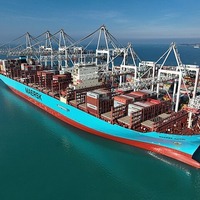
The UN maritime agency opened a special session in London on Tuesday, where nations are debating and may adopt a landmark framework to curb greenhouse gas emissions for global shipping, amid intense debate and open US opposition.
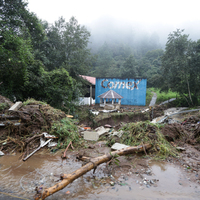
From the rainforests of Central America to low-lying atolls in the Pacific and drought-stricken plains in Africa, leaders came to the United Nations General Assembly on Wednesday with a common message: climate change is no longer a distant threat, but an immediate danger demanding bolder global commitments.
The surge was driven by continued human emissions, more wildfire activity and weakened absorption by land and ocean sinks a development that threatens to create a vicious climate cycle.
Tripling since the 1960s
TheWMOs latest Greenhouse Gas Bulletin shows that CO growth rates have tripled since the 1960s, accelerating from an annual average increase of 0.8 parts per million (ppm) to 2.4 ppm per year, in the decade from 2011 to 2020.
The rate jumped by a record 3.5 ppm between 2023 and 2024the largest increase since monitoring began in 1957.
Average concentrations reached 423.9 ppm in 2024, up from 377.1 ppm when the bulletin was first published in 2004.
Roughly half of CO emitted remains in the atmosphere, while the rest is absorbed by land and oceans; storage that is weakening as warming reduces ocean solubility and worsens drought.
The 2024 spike was likely amplified by an uptick in wildfires and a reduced uptake of CO by land and the ocean in 2024 the warmest year on record, with a strong El Nio weather pattern effect.
There is concern that terrestrial and ocean CO sinks are becoming less effective,which will increase the amount of CO that stays in the atmosphere, thereby accelerating global warming. Sustained and strengthened greenhouse gas monitoring is critical to understanding these loops, said Oksana Tarasova, WMO senior scientific officer who coordinates the bulletin research.
Other record highs
Methane and nitrous oxide the second and third most significant long-lived greenhouse gases also set new emission records.
Methane levels rose to 1,942 ppb, 166 per cent above pre-industrial levels, while nitrous oxide hit 338 ppb a 25 per cent increase.
The heat trapped by CO2and other greenhouse gases is turbo-charging our climate and leading to more extreme weather. Reducing emissions is therefore essential not just for our climate but also for our economic security and community well-being, said WMO Deputy Secretary-General Ko Barrett.
Monitoring and action
The WMO issued the report ahead of the COP30 climate conference in Belm, Brazil, beginning in November, emphasising that sustained global monitoring is vital for guiding climate action.